Summary
Sustainability advocates believe that a free-market economy is “unsustainable,” but free societies have the “intangible capital” needed to create more wealth with less pollution and less consumption of natural resources.
Word count: 648
Portland political officials recently announced plans to create a “first-class World Sustainability Center.” According to promoters, the center could house “green” businesses, nonprofits, the city’s sustainable development bureaucrats and research facilities. The building might cost between $6 million and $16 million and likely would be subsidized with public funds. City Commissioner Dan Saltzman and Mayor-elect Sam Adams have convened a group of supporters to discuss the concept.
It’s difficult to understand why elected officials think this is a priority. “Sustainability” is not an industry or an economic cluster. It’s not even a concept with a meaningful definition.
Fundamentally, sustainability advocates start with a negative: They believe that our current economic system is “unsustainable” because the earth’s resources are presumed to be finite. They tend to equate wealth creation with resource consumption, so they predict a future of extreme scarcity coupled with unacceptable levels of pollution.
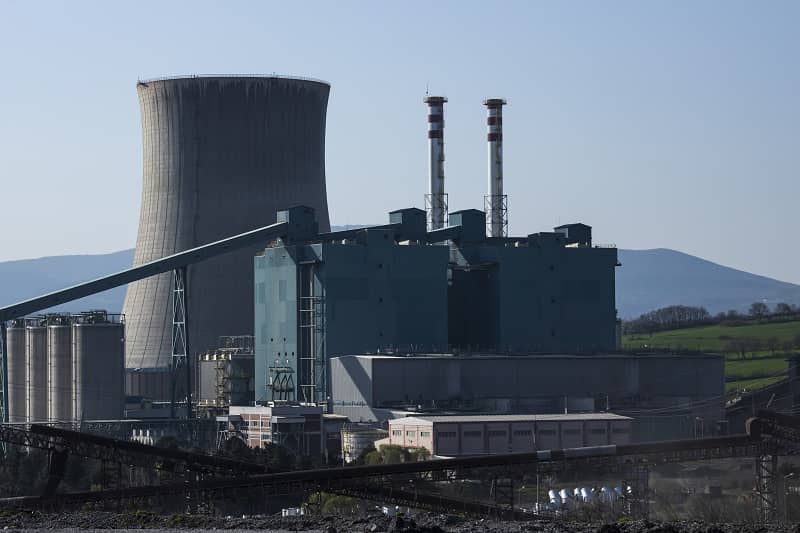
But the actual evidence paints a very different picture. Long-term trends in the U.S. show growing levels of wealth based on declining use of resource inputs, with less and less pollution as by-products. For example:
- Since 1970, the amount of energy needed to produce a single unit of Gross Domestic Product (GDP) in the U.S. economy has declined by 51%.
- The amount of chemicals reported in the Environmental Protection Agency’s annual Toxic Release Inventory dropped by 60% between 1988 and 2006.
- Since 1980, while the national GDP has gone up 121% and population has increased by 32%, aggregate air pollutants regulated under the federal Clean Air Act have actually decreased by 49%.
- Massive amounts of wildlife habitat are being protected through both government purchase programs and those run by private non-profits.
While many people worry about greenhouse gases and global warming, total carbon dioxide emissions in the U.S. fell 1.5% in 2006 from 2005 levels, and more decreases are likely for the foreseeable future. The greenhouse gas intensity of the U.S. economy – the total amount of greenhouse gases released per unit of GDP – has declined by 28% since 1990 and is dropping by an average of 2% per year.
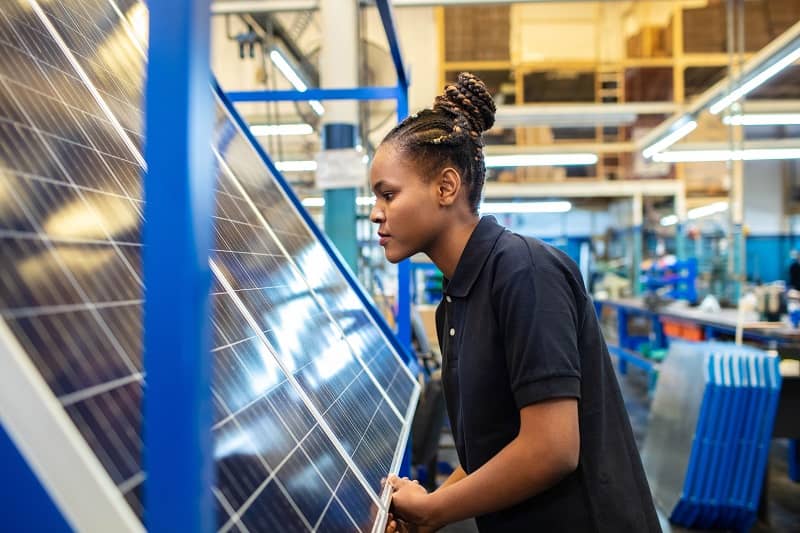
If GDP is growing at the same time energy consumption and pollution levels are dropping, why do we need to change, especially when most of the suggested reforms depend on subsidies? For instance, local “sustainability” icons such as the Portland streetcar, light rail and transit-oriented development are all huge money-losers, which means they are not economically sustainable. The energy efficiency of rail transit since 1970 has worsened by 29% on a per-passenger-mile basis, while the efficiency of the typical private automobile has actually improved by 29%, yet we continue to waste billions on rail transit. And the entire “green power” movement is highly dependent on subsidies such as federal and state tax credits.
These interventions are both expensive and unnecessary because wealth creation is not particularly dependent on the availability of natural resources. The World Bank released a report last year showing that aggregate national wealth is a function of three related factors: natural capital, such as water and topsoil; produced capital, including machinery, equipment and structures; and intangible capital, which includes education and labor along with institutions such as the rule of law. They found that in the wealthiest countries, including Switzerland, Denmark and the United States, less than three percent of total wealth relies on natural capital. More than 80% of wealth is derived from intangible capital. The reverse is true for the poorest countries.
Since intangible capital is infinite and non-polluting, clearly the U.S. is already on a path to sustainability because we value freedom, education and protection of property rights. Yet most “sustainability” advocates call for just the opposite: ever-larger government, mandated income transfers and communal ownership of resources.
We don’t need a subsidized World Sustainability Center in Portland; we just need strong protection of our individual rights. That’s the basis of a truly sustainable society.
Attention editors and producers:
Cascade Commentaries are provided for reprint in newspapers and other publications, with credit given to author(s) and Cascade. Contact Cascade to arrange print or broadcast interviews on this commentary topic.
Electronic text files are available online at www.cascadepolicy.org.
Please contact:
Nancy Wheaton
Cascade Policy Institute
4850 SW Scholls Ferry Rd.
Suite 103
Portland, Oregon 97225
Phone: (503) 242-0900
Fax: (503) 242-3822
www.cascadepolicy.org
info@cascadepolicy.org
Cascade Policy Institute is a tax-exempt educational organization as defined under IRS code 501(c)(3). Nothing appearing in this Cascade Commentary is to be construed as necessarily representing the views of Cascade or its donors, or as an attempt to aid or hinder the passage of any bill before any legislative body. The views expressed herein are the author’s own.