We Can’t Afford Metro’s Affordable Housing
by Randal O’Toole
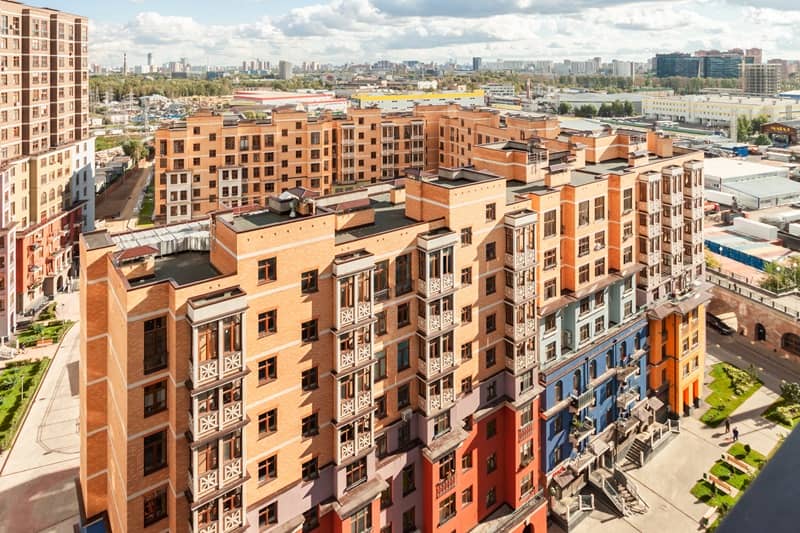
Affordable housing projects funded with Metro’s 2018 housing bond have wasted more than a billion dollars due to bad decisions made by Metro on how to spend that money. Metro’s single-minded focus on increasing the population density of the Portland urban area led it to mostly fund projects that are three to six stories tall.
Such projects are more expensive than low-rise projects because they require elevators, large common areas that do not contribute to livable housing space and need more concrete and steel than one- and two-story buildings. Three- to six-story projects funded by Metro cost about 50 percent more per livable square foot than the few two-story projects it funded. The one taller project, an 11-story skyscraper in Portland’s Hollywood district, cost almost 100 percent more.
Metro also decided to exclusively fund non-profit organizations to develop these projects. While non-profit sounds like it would save money, in fact it merely adds another layer of bureaucracy that takes its share of the funds.
The non-profits that develop these projects typically take about 12 percent of the money as “developer fees,” then hire for-profit construction companies to do the actual work—often the same companies that build their own subsidized housing projects—that take their own profit out of the funding. Studies have found that, on average, projects built by non-profit groups cost about 20 percent more per square foot than those built by for-profit groups.
The projects funded by Metro cost an average of about $490,000 per dwelling unit, which is close to the average cost of single-family homes in the Portland area. But these are nowhere near as large as single-family homes, averaging just 700 square feet in size. That means they cost an average of $700 per square foot, two to three times the cost of constructing single-family homes.
Worst of all, Metro’s projects made housing in the rest of the region less affordable than ever for two reasons. First, the region has a shortage of workers who are skilled at building homes. Every worker building a subsidized housing project isn’t available to build new market-rate homes for everyone else.
Second, Metro’s housing bond is being repaid out of property taxes. Since banks limit the amount people can borrow to buy a home to 30 percent of their income minus property taxes and insurance, an increase in property taxes makes housing less affordable.
Meanwhile, the city of Portland has its own subsidized housing program that is funded out of a 1 percent tax on new home construction. That makes new homes more expensive, which raises the cost of all housing in the region.
Metro persuaded voters to support its subsidized housing bond because the region’s housing prices are so expensive. But the reason they are expensive is because of Metro’s policy favoring dense housing over single-family homes. Metro is fully aware of this: a 1997 study, one of whose co-authors was Portland Bureau of Housing staff member, found that “housing development costs rise dramatically as building height and housing density increase.”
Metro argues that subsidized housing for low-income people should be near transit stops. But the Census Bureau’s 2024 American Community Survey found that less than 7 percent of low-income people in the Portland urban area took transit to work, while 70 percent either drove alone or carpooled.
At least 80 percent of Americans—and probably a greater percentage of Oregonians—would prefer to live in single-family homes than in 700-square-foot apartments. Thanks to Metro’s density campaign, single-family homes cost about twice as much as they ought to cost.
Metro’s density program does a disservice to every Portland-area resident who would like to live in a single-family home but can’t afford one. Metro’s subsidized housing program does a disservice to taxpayers who can’t afford to live in homes that cost $700 per square foot but are expected to pay for such homes for a few thousand lucky low-income people.
Randal O’Toole is an Adjunct Scholar at Cascade Policy Institute, Oregon’s free market public policy research organization. He is a transportation and land-use policy analyst and the author of several books, including American Nightmare: How Government Undermines the Dream of Homeownership and Romance of the Rails: Why the Passenger Trains We Love Are Not the Transportation We Need. He writes from Central Oregon.