The False Promise of Portland’s “All-Electric” High Schools
John A. Charles, Jr.
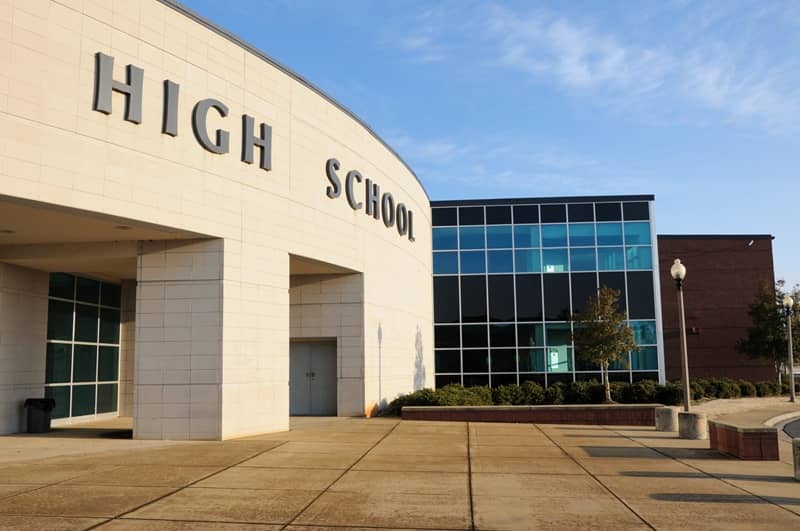
Portland Public Schools (PPS) held a ground-breaking ceremony in North Portland on May 29 to mark the beginning of construction for a new, $466 million Jefferson High School.
The Oregonian dutifully reported that the new school would be “all-electric powered,” as if that’s a benefit for students. But the promise delivers zero benefits to students, and the school won’t be all-electric anyway.
Just days before the groundbreaking, PPS Director Christy Splitt, who works for the Oregon Department of Energy (ODOE), sheepishly announced that Bunson Burners in science labs require natural gas. Therefore, all three high school rebuilds underway (Jefferson, Cleveland, and Ida B. Wells) will retain existing natural gas infrastructure.
Moreover, state law requires that each building includes a back-up generator, and school designers announced several years ago that diesel was the only fuel that would work.
Even if an all-electric building were possible, the impact on carbon dioxide emissions would be negligible. According to the U.S. Energy Information Administration, 57 percent of natural gas delivered to Oregon consumers is used for electric power generation. If PPS could magically rid itself of natural gas pipelines, electricity consumption would increase and the gas would simply be combusted somewhere else to serve that need.
Oregon has a statewide decarbonization mandate for electricity adopted five years ago and activists think that will solve the problem, but the power sources preferred by Oregon politicians – wind and solar – provided only 10.9 percent of all megawatt hours of electricity consumed in Oregon during 2023, according to Oregon Department of Energy. Fossil fuels provided at least 38 percent.
Not only is the District’s climate policy ineffective, but it’s also expensive. Before the PPS board referred its $1.8 billion bond measure to voters for the May 2025 ballot, they retained Cornerstone Management to analyze why PPS school construction costs were so much higher than those observed in Beaverton, where the new Beaverton High School will open in September at a cost of $252 million.
Among other things, Cornerstone recommended that PPS drop its plans for all-electric construction because it was likely to add at least $10 million to the cost of each school. According to the public records request Cascade filed with the district last year, no information was available on the added costs of building electrification.
Ignoring those costs is not going to end well for PPS. Last week, as PPS hosted its groundbreaking party, New York Gov. Kathy Hochul pulled the plug on that state’s flagship decarbonization law, known as the Climate Leadership and Community Protection Act, approved in 2019.
The first compliance deadline for emissions reductions under the current mandate is 2030, and a memo released on February 26 by the New York State Energy Research and Development Authority found that the likely annual cost of decarbonization to upstate oil and gas households could be over $4,100 by 2031. Annual costs for New York City gas users would be $2,340.
Motorists would take the biggest hit, with possible additional costs of $2.23 per gallon.
For perspective, Oregon voters crushed Gov. Tina Kotek’s gas tax increase of $0.06 by an 83 to 17 percent margin. It’s understandable why New York Gov. Hochul, who is up for reelection in November, declined to impose a carbon tax increase more than 37 times higher.
Activists opposed to fossil fuels like to talk about the Social Cost of Carbon, but the Social Cost of Blackouts is a more important metric. Electricity runs the economy and the national electrical grid is dependent on coal, oil, and gas. If we sacrifice reliable and affordable electricity, we will instantly return to the nineteenth century.
Nobody wants to live there.
The implosion of New York’s climate law was predictable, as was the PPS electric school policy failure. It’s not too late for the PPS Board to embrace fiscal responsibility and re-allocate $30 million to renovations that would actually improve school buildings.
John A. Charles, Jr. is President and CEO of Cascade Policy Institute, Oregon’s free market public policy research organization. He researches, writes, and presents testimony and analysis on state and local issues important to the freedom and opportunity of all Oregonians.