WES Costs Taxpayers $95 per Ride—Time to Shut It Down
by Randal O’Toole
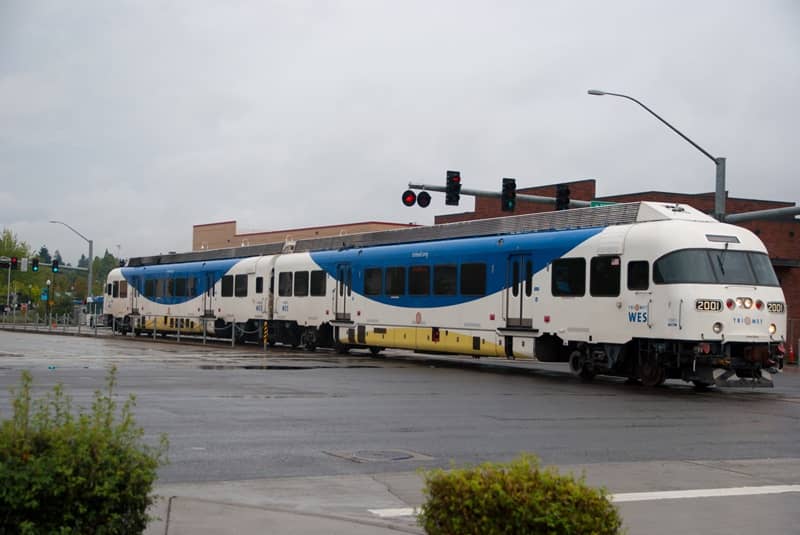
It is time for TriMet to pull the plug on the Westside Express Service (WES), the commuter train between Beaverton and Wilsonville. The train is a huge money sink—costing taxpayers almost $95 for every one of the few people who ride it—and hardly anyone uses it. The Diesel engines that power it unnecessarily spew large amounts of pollution and greenhouse gases into the atmosphere.
When TriMet proposed WES in 2004, it predicted it would carry 3,000 trips each weekday. It hasn’t come close. Its highest trip count was 2,031 in 2014, declining to 1,490 trips per weekday in 2019.
Ridership crashed during the pandemic and by 2025 it had recovered to only 488 trips per weekday. If each rider travels round trip, that’s roughly 244 people.
Federal Transit Administration (FTA) data show that fares don’t come close to covering operating costs. Even in 2014, riders paid for only 8 percent of the cost of operating the railcars. In every year since 2021, taxpayers have had to cover more than 99 percent of WES’ operating costs.
The FTA data also reveal a peculiar response to the pandemic. TriMet cut WES vehicle-miles in half, mainly by running only one railcar instead of two coupled together. Yet it spent 72 percent more on operating costs. As a result, the cost per vehicle-mile grew by 268 percent and the cost per rider grew by 424 percent.
More than a third of the increase in operating costs was in “general administration” (bureaucratic overhead), which grew by 175 percent overall and 736 percent per rider. Riders in 2025 paid an average of just 62¢ per ride while taxpayers had to cover almost $95 per ride.
Someone who makes a round trip on WES every weekday would be getting a subsidy of almost $48,000 a year, enough to buy a new Tesla Model 3 or similar electric car. The total subsidy in 2025 was $11.6 million, enough to double service on two TriMet bus routes, which would add far more riders than would be lost by discontinuing WES.
Earlier this year, Minnesota shut down its Northstar commuter train, which suffered similarly low ridership and high operating costs. Even Metropolitan Council Chairman Charles Zelle, who oversaw the line, admitted that it “never lived up to its aspirations.” TriMet should follow Minnesota’s lead.
The problem, TriMet will say, is that WES was partly funded by a federal grant, and if TriMet stops running it, the FTA will demand a refund of that grant. However, TriMet can reduce the required refund in several ways.
First, the FTA will want a refund of just the depreciated value of the things purchased with the grant. Railcars, for example, have an expected life of 25 years, so they are mostly depreciated already. TriMet can sell the railcars to another transit agency and return the sale price to the FTA.
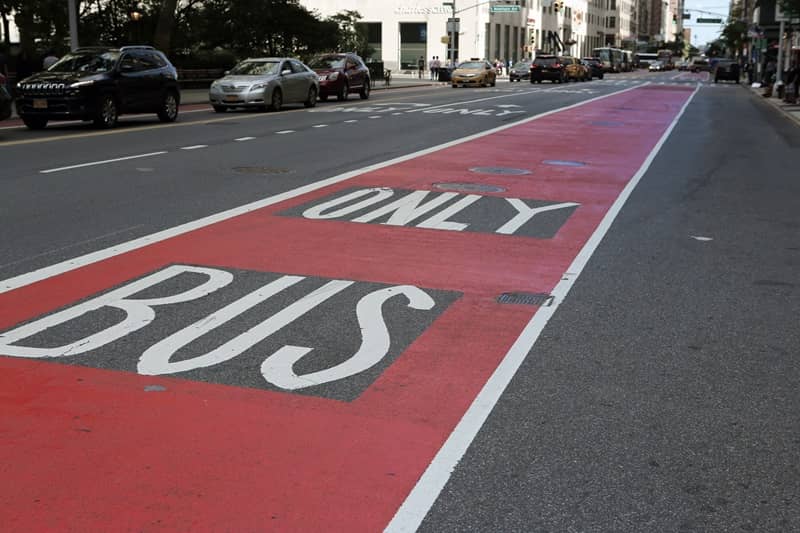
Second, infrastructure such as stations and park-and-ride lots can serve buses as well as trains. TriMet could replace WES with a nonstop bus that runs between Beaverton and Wilsonville stations and use the other stations for local buses. Since TriMet would still be using those stations, it wouldn’t need to refund their costs to the FTA.
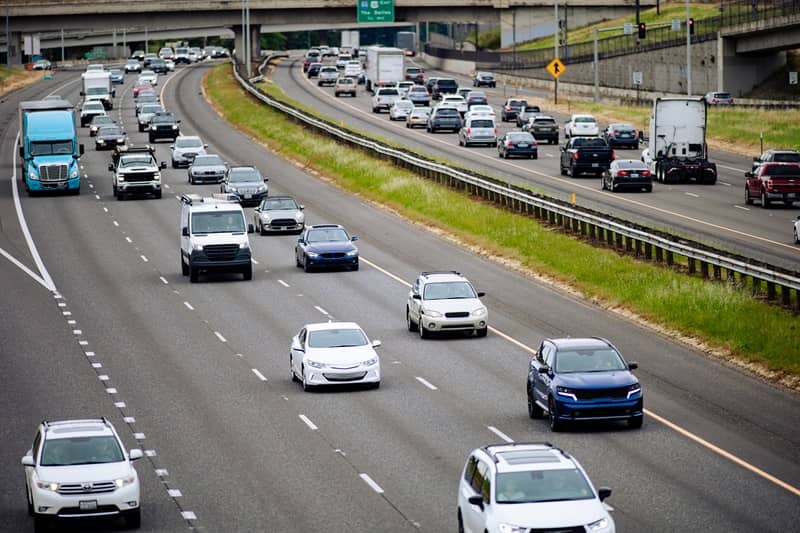
Third, TriMet can argue that it has an environmental imperative to replace the railcars with battery-powered buses. FTA energy data reveal that WES consumed almost 10,000 British thermal units (BTUs) and emitted almost 400 grams of greenhouse gases for every passenger-mile that it carried in 2025. For comparison, the average car in 2023 (the most recent year for which data are available) used about 2,900 BTUs and emitted about 205 grams of greenhouse gases per passenger-mile.
Replacing WES’ Diesel railcars with battery-powered buses will greatly reduce greenhouse gas emissions. Because Northwest electricity is mostly hydropower, TriMet’s light-rail trains effectively emit just 75 grams of greenhouse gases per passenger-mile. Even TriMet’s Diesel buses emit less than half of WES’ greenhouse gases per passenger-mile, mainly because buses weigh a lot less than railcars.
WES railcars carried an average of just 13 passengers in 2025 (calculated by dividing passenger-miles by vehicle-miles). A 40-seat electric bus can easily carry this number, even given fluctuations in ridership over the course of a day.
One more obstacle to shutting down WES is that it runs on tracks of the Portland & Western (P&W) Railroad. When TriMet was planning WES, it agreed to pay P&W $2 million to $3 million a year in operation and maintenance costs for 50 years even if it stopped running commuter trains.
Fortunately, TriMet has some leverage in negotiating with Portland & Western. If it cancels WES, TriMet could tear out all the improvements it made to the P&W corridor, selling the assets to help repay the FTA. P&W might waive the rest of the 50-year contract obligation if TriMet were to leave some of those improvements in place.
WES never made sense in the first place, but it makes even less sense in a post-COVID world when four times as many Portland-area workers are working at home as are taking transit to work. TriMet should immediately begin negotiations with the FTA and P&W to save taxpayers’ money and reduce greenhouse gas emissions.
Randal O’Toole is an Adjunct Scholar at Cascade Policy Institute, Oregon’s free market public policy research organization. He is a transportation and land-use policy analyst and the author of several books, including American Nightmare: How Government Undermines the Dream of Homeownership and Romance of the Rails: Why the Passenger Trains We Love Are Not the Transportation We Need. He writes from Central Oregon.